Why AcubeSAT?
Our mission was inspired by a fundamental question: Can we perform large-scale, biology-focused research in outer space, beyond the boundaries of crewed spacecraft?
And if so, could this be achieved in a low-cost, scalable, and reproducible way, enabling us to explore complex challenges such as the long-term effects of space conditions on human health?
Nearly 700 humans have traveled into space, offering valuable insights into the physiological effects of spaceflight. While many studies have characterized systemic-level changes in human health and performance, our understanding at the cellular and molecular levels remains fragmented and insufficient.
Why Space Biology Matters
Large Scale
Missions have typically studied only 1-3 genes at a time, limiting scientific insight.
High Resolution
Past observations lacked the detail needed for meaningful molecular analysis.
Long Duration
Previous experiments ran for limited periods, missing long-term effects.
A Miniaturized Space Lab
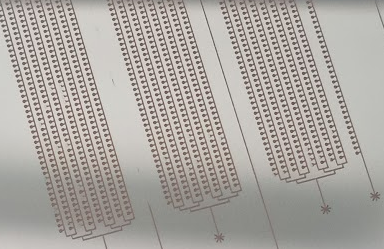
AcubeSAT will carry a miniaturized space biology laboratory, capable of performing in situ, high-throughput measurements of microorganism functions in space.
Our system combines parallel microfluidics (lab-on-a-chip), imaging, automated fluidic control, and environmental monitoring to enable long-term experiments.
These experiments will study gene expression on a scale 100–200 times greater than previous missions, while also providing high-quality visual observations over an extended, multi-month mission.
Key Capabilities
- → Parallel microfluidic lab-on-chip devices
- → Periodic imaging
- → Automated fluidic control
- → Environmental monitoring
- → Multi-month experiment duration
- → Modular, open-source platform
Open & Accessible
AcubeSAT is an educational project meant to pave the way for innovative research. To make space more inclusive and approachable, we design a low-cost, scalable and easily reusable laboratory platform.
We strive to share all experiment results, code, schematics and knowledge gained, staying true to our open-source ideals.
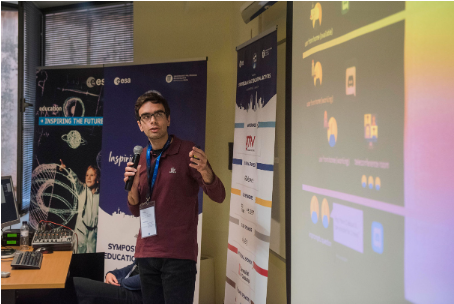
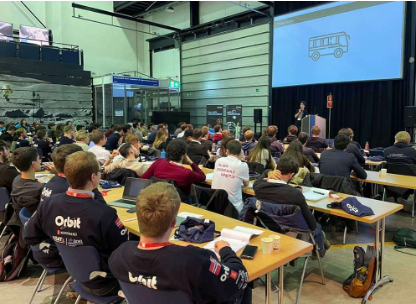
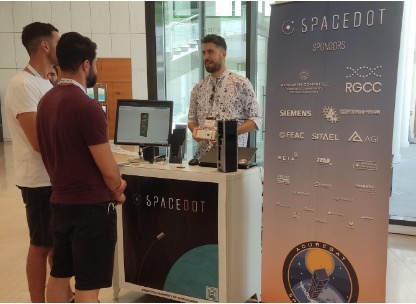
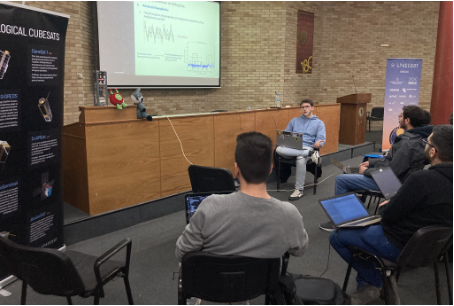
So far, we have had more than 250 members participate in the project since 2018, many of whom have used the expertise gained to kickstart careers in the space sector.